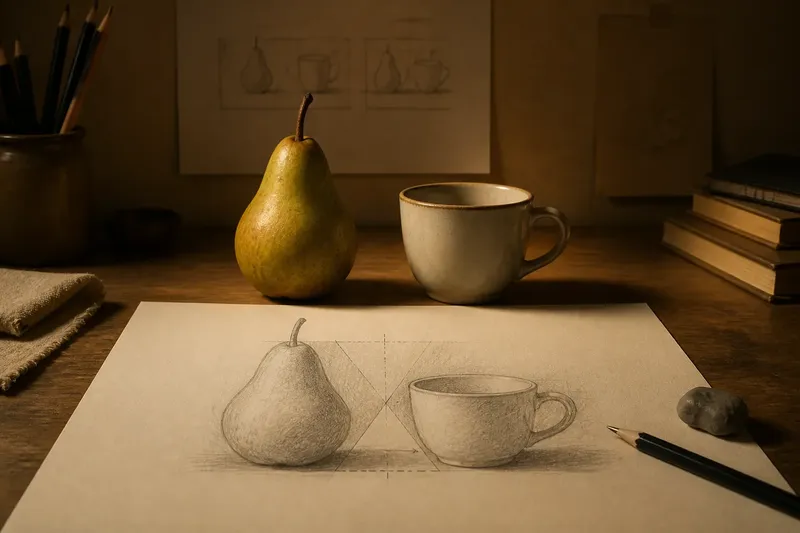
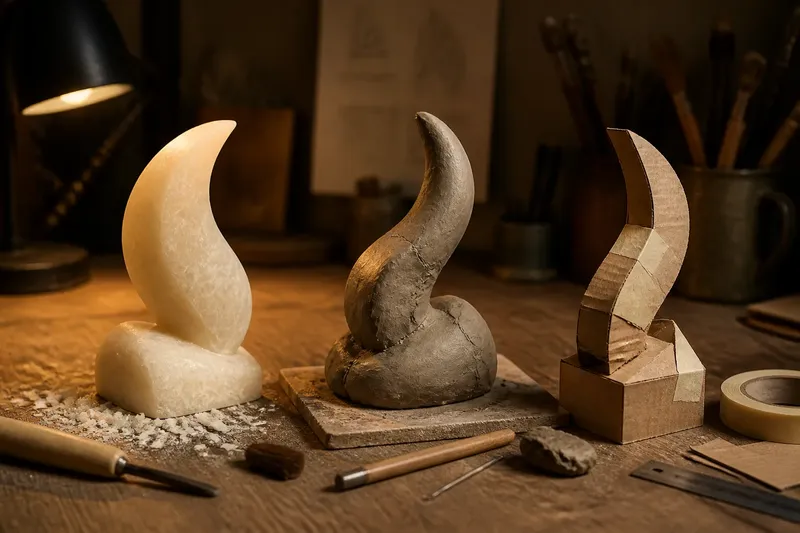
A Pocket Sketchbook for a Museum Afternoon
A pocket sketchbook for a museum afternoon helps you notice shape and proportion without copying whole artworks or letting drawing take over the visit.
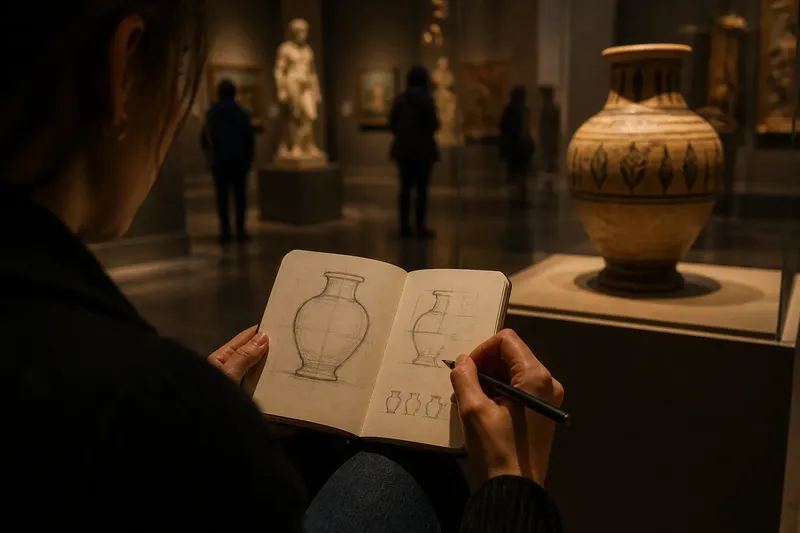
The most common mistake with a pocket sketchbook for a museum afternoon is trying to copy a whole artwork before the room or your attention moves on. The cost is a crowded page, a hurried visit, and little record of what first held your eye. Choose one visible relationship instead: the width of a vase against its height, the angle of a figure’s shoulder, or the curve where a bowl meets its foot.
A museum sketch does not need to stand in for the object. It can be a small note about looking: a few lines that hold a proportion, a silhouette, or the way two forms meet. The right approach depends less on drawing skill than on the conditions of the visit. A quiet bench, a busy gallery, and a short stop between other plans each call for a different kind of page.
Choose Your Visit
Before opening the book, decide what kind of afternoon you actually have. This is not a promise to draw for the whole visit; it is a way to make a modest intention fit the room, your company, and your energy.
- If you have a quiet stretch alone, linger over one object and draw its outer shape beside one comparison line. This suits a visit with time to look back and forth, and gives proportion room to become the subject.
- If you are visiting with someone, make one brief sketch, then put the book away while you talk or move on together. A single observation is easier to share than an extended drawing session that leaves your companion waiting.
- If the gallery is crowded, work from a place that does not block passage and make a small contour note without settling in. This fits a room where people are flowing around an artwork and your attention will be interrupted.
- If you are already tired, draw one relation, such as a tall form beside a low one, and stop. A small page can register attention without asking the visit to become an assignment.
These choices are not a ranking. The useful one is the option that lets you remain considerate of other visitors and still notice something with care.
Pack for Quick Looking
Choose a book that opens comfortably in one hand or rests on your lap, with paper that accepts the mark you prefer. A soft pencil is easy to start and erase; a fine black pen makes each line count; a small set of colored pencils can distinguish overlapping forms without inviting a full rendering. Pick one main tool, perhaps with an eraser, rather than bringing a case of supplies you will spend the afternoon managing.
A small book with a firm cover can be useful when you are standing, while a larger page may feel easier on a bench. Neither is inherently better. If the book is awkward to hold or its paper makes your chosen tool frustrating, it is less likely to serve the short, attentive drawing this visit calls for.
Check the museum’s posted rules before drawing. Requirements can differ for galleries and objects, so follow the instructions there and ask staff if a rule is unclear. Keep materials contained, avoid leaning on display cases or walls, and leave enough room for others to view the work.
What is not worth the effort is assembling a perfect travel kit. A reliable pencil and a book you will actually carry are more useful than specialized supplies that make you hesitant to begin.
Draw the Relationships
Start with a simple question about shape rather than the object’s identity. Is the silhouette wider at the top or bottom? Does a handle sit near the middle of a vessel, or closer to its rim? Does a figure’s head tilt in the same direction as the supporting line of the body? Questions like these give the page a clear task without turning it into a miniature replica.
Use a few marks to set the broad proportion first. A light vertical stroke can establish height; a short cross-stroke can suggest the widest point. Add the outer contour only where it helps clarify that relationship. If the shape changes direction, mark the change rather than tracing every edge. A broken line often records the act of looking more honestly than a polished outline.
Then compare one part with another. You might note that a handle reaches about halfway up a jar, or that a seated figure’s folded arm occupies a narrow wedge beside the torso. These comparisons need not be exact measurements. Their purpose is to make you look again and decide what seems large, small, tilted, compressed, or extended.
Imagine you stop in front of a ceramic vessel with a broad belly and a narrow neck. You draw a loose oval for the widest part, a shorter line for the neck’s height, and one curve to show where the shoulder slopes inward. The expected result is not a likeness that could replace the vessel; it is a compact note that preserves the contrast between its swelling body and tight opening.
Let the Gallery Decide
Some works are better suited to a quick sketch than others, and the room can change the choice. A sculpture with a clear silhouette may offer an immediate shape study. A painting crowded with small details may be easier to approach through one large light-dark mass or the angle of a single figure. Choose the part you can observe without needing to explain the whole work.
Distance matters, too. If you can step back without obstructing anyone, a few paces may help you compare the overall width and height. If you must remain close to a wall or barrier, keep the drawing to the visible contour or a local relationship. Do not move around a crowded gallery simply to chase a more convenient angle.
For glass, reflective surfaces, or objects seen behind a case, avoid treating glare and reflections as errors to solve. They are part of what is visible from your position, but they can also obscure the form. You can sketch the contour you can discern, or leave the object and choose a clearer shape nearby. The decision is practical, not a judgment about the artwork.
If you are uncertain which object to draw, look for a shape that can be described in a few plain words: tall and pinched, low and broad, leaning left, or balanced on a narrow base. A clear verbal description often points to a manageable sketch. If the description keeps expanding into a list of details, choose a smaller part.
Questions Before You Begin?
What should I sketch first?
Begin with the broadest shape you can describe: the object’s silhouette, its main tilt, or the relation between two parts. That gives you a useful starting point before surface details compete for attention.
How long should I spend on one drawing?
Stop when the page records the relationship you came to observe, or when the room makes continued drawing awkward. There is no need to fill the page or finish an image before moving on.
Can I sketch in front of a painting?
Yes, if the museum permits it and you can work without blocking other visitors. For a complex painting, choose one shape, edge, or proportion rather than attempting to reproduce the entire composition.
What if my sketch looks wrong?
Look back at the object and identify the specific relation that seems off: perhaps the top is too wide or the angle too upright. Correct that one feature with a new line, or leave the first mark visible as a record of your changing observation.
Keep a Useful Record
Leave a little space beside the drawing for a few words. Note the gallery, the object’s general type, or the visual quality you noticed, such as “heavy base, thin rim” or “two shapes almost touch.” If you want to identify a particular work later, use the museum’s label or permitted notes rather than relying on memory. A brief annotation can make the sketch legible to your future self without turning the visit into cataloging.
When you close the book, resist the urge to judge the page by how closely it resembles the object. Ask instead whether it preserves the decision you made about what to notice. If the line shows the tilt, if the paired shapes still feel unequal, or if the open space makes the object seem narrow, the sketch has done its job.
A pocket sketchbook for a museum afternoon works best as a record of attention, not a collection of attempted copies. Pick one shape relationship that suits the room and your available time, make enough marks to remember it, and then let the rest of the visit belong to looking.